The Quintessential Experience of Dambulla Royal Cave Temple
The Golden Temple: 2,000 Years of Sacred Silence
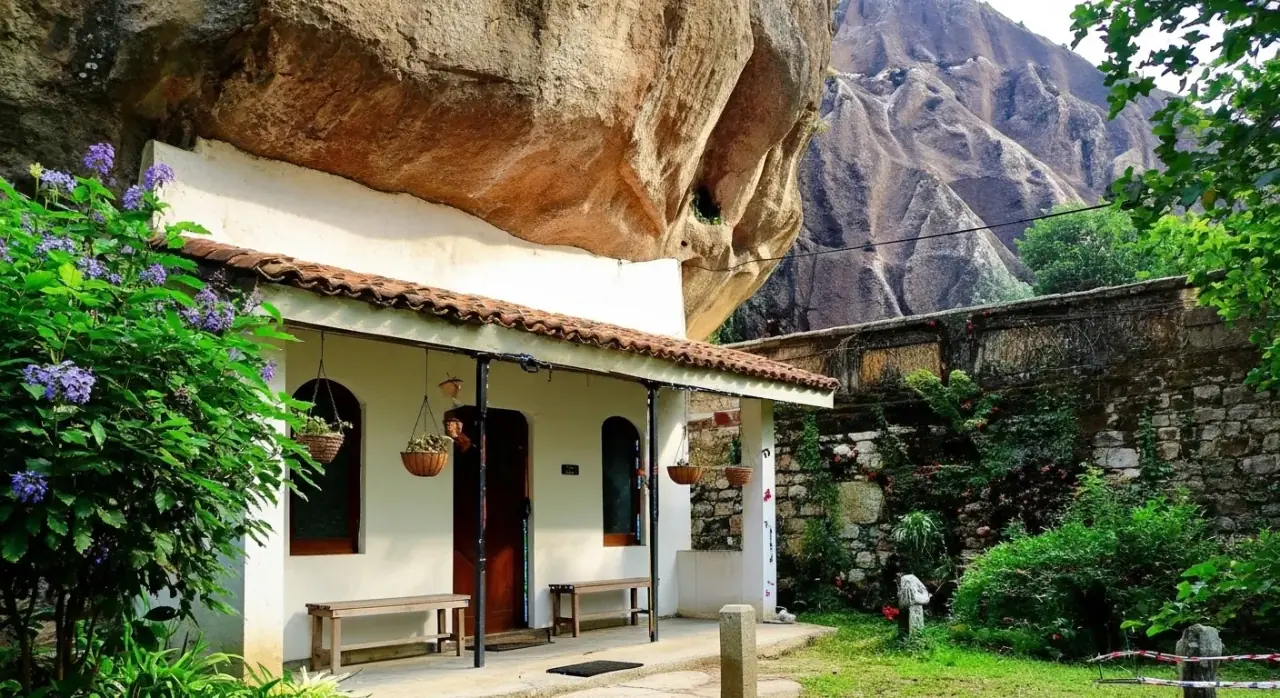
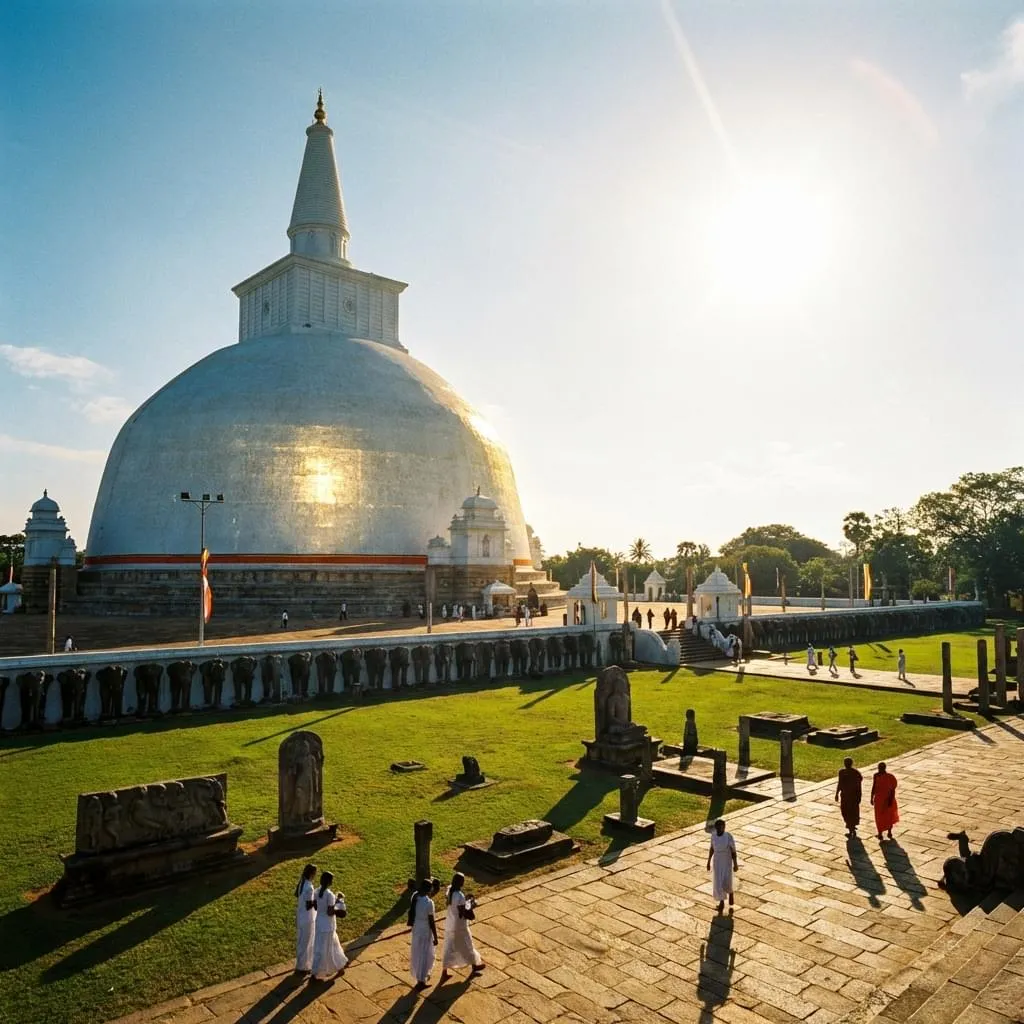
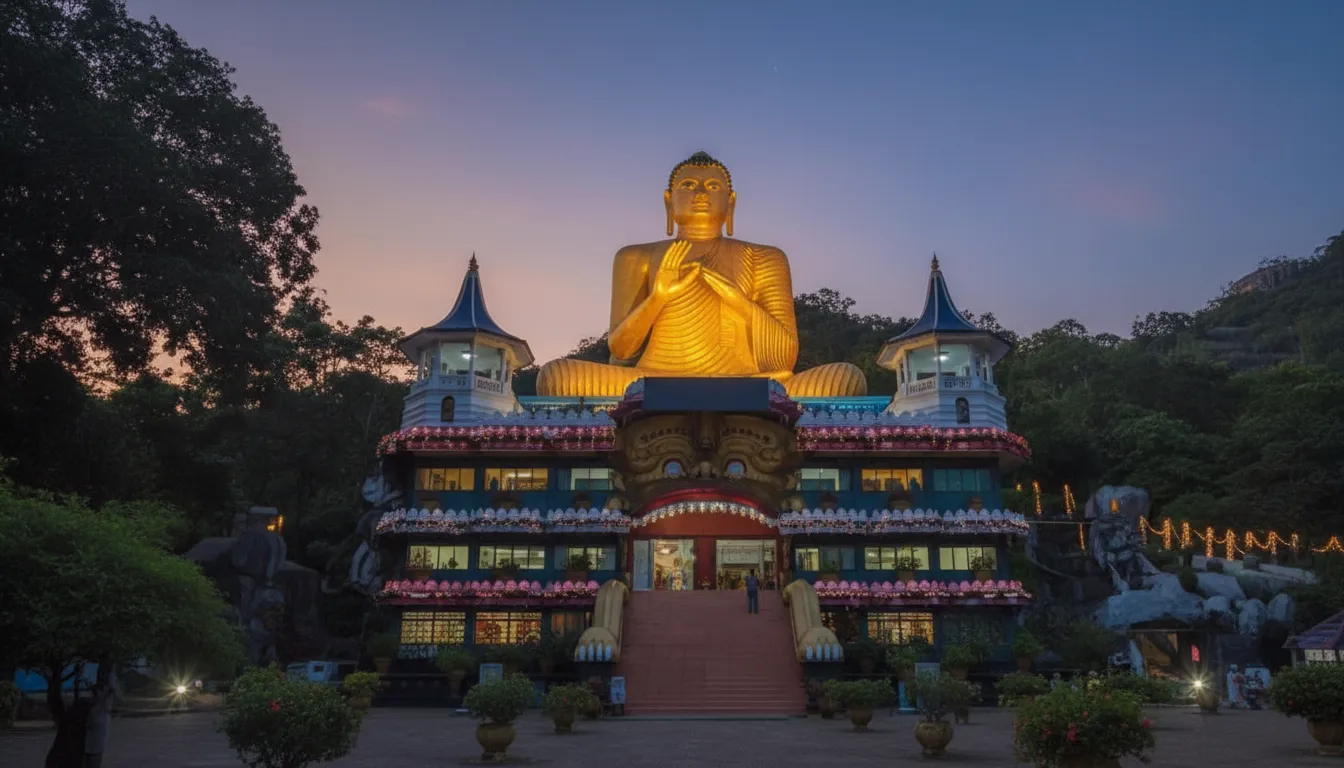
Perched majestically atop a 160-meter-high granite outcrop, the Dambulla Royal Cave Temple—also known as the Golden Temple—is the largest and most remarkably preserved cave temple complex in Sri Lanka. This UNESCO World Heritage site is a profound tapestry of faith, art, and endurance. Its history dates back over 22 centuries, when King Valagamba sought refuge in these very caves during his exile from the capital. Upon reclaiming his throne in the 1st century BCE, he transformed the caverns into a magnificent religious center as an act of gratitude, a legacy that has been honored and expanded by nearly every major monarch of the island's history.
A Living Gallery of Buddhist Art
The complex consists of five primary caves, each a sanctuary carved deep into the rock. As you step from the bright tropical sun into the cool, silent interior, you are greeted by one of the world's most impressive collections of religious art. Over 2,100 square meters of murals adorn the ceilings and walls, following the natural contours of the rock to create a seamless, flowing narrative of the Buddha's life and the history of the island. These paintings represent a bridge between eras, showcasing the transition from the classical Anuradhapura style to the vibrant folk-art aesthetics of the 18th-century Kandyan kingdom.
The Five Sanctuaries of Devotion
Each cave at Dambulla has its own distinct character and spiritual gravity:
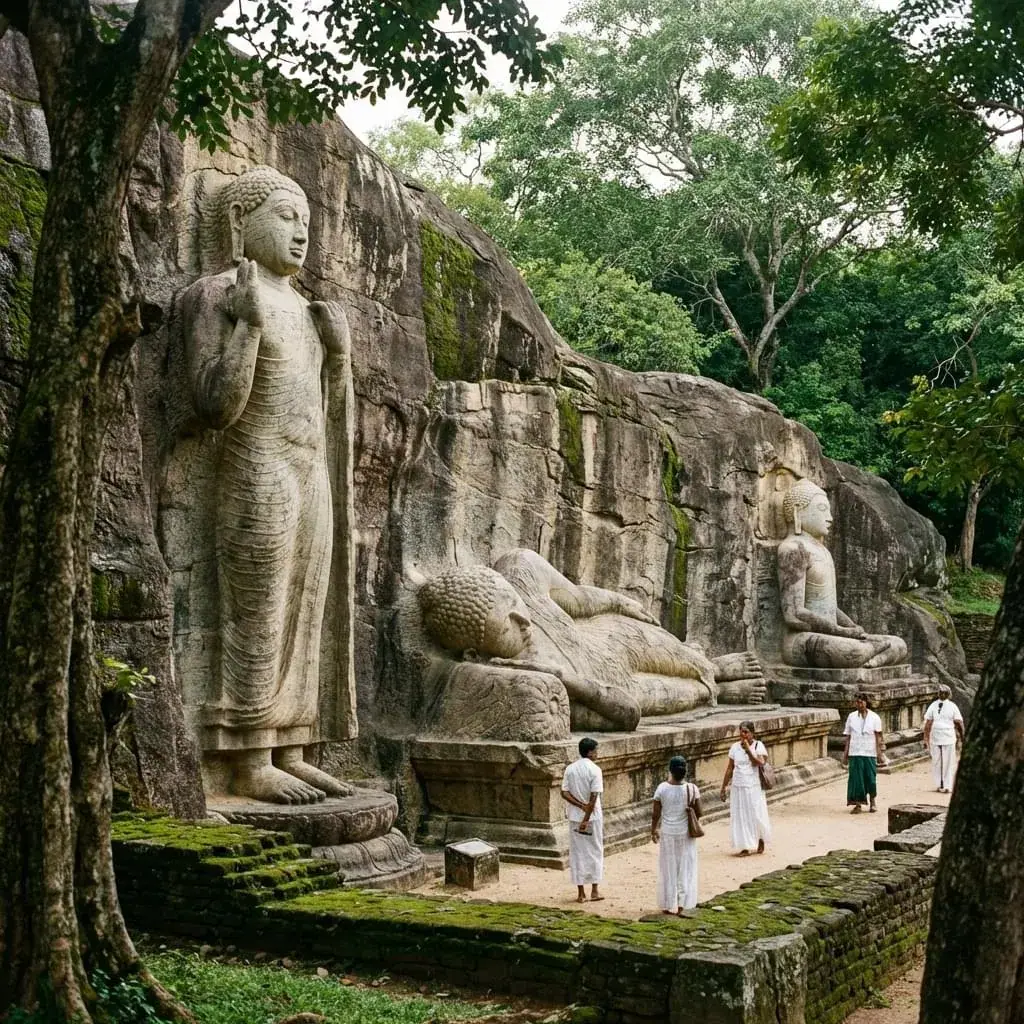
- Caves 1 & 2 (Devaraja & Maharaja): These are the largest and most spectacular. Cave 1 houses a 15-meter reclining Buddha carved directly from the living rock, while Cave 2 contains over 60 statues and a sacred spring whose water is used in temple rituals.
- Caves 3, 4 & 5: These additions from the Kandyan era (17th & 18th centuries) feature thousands of smaller Buddha figures and detailed murals that depict the temptation by the demon Mara and the first sermon at Sarnath.
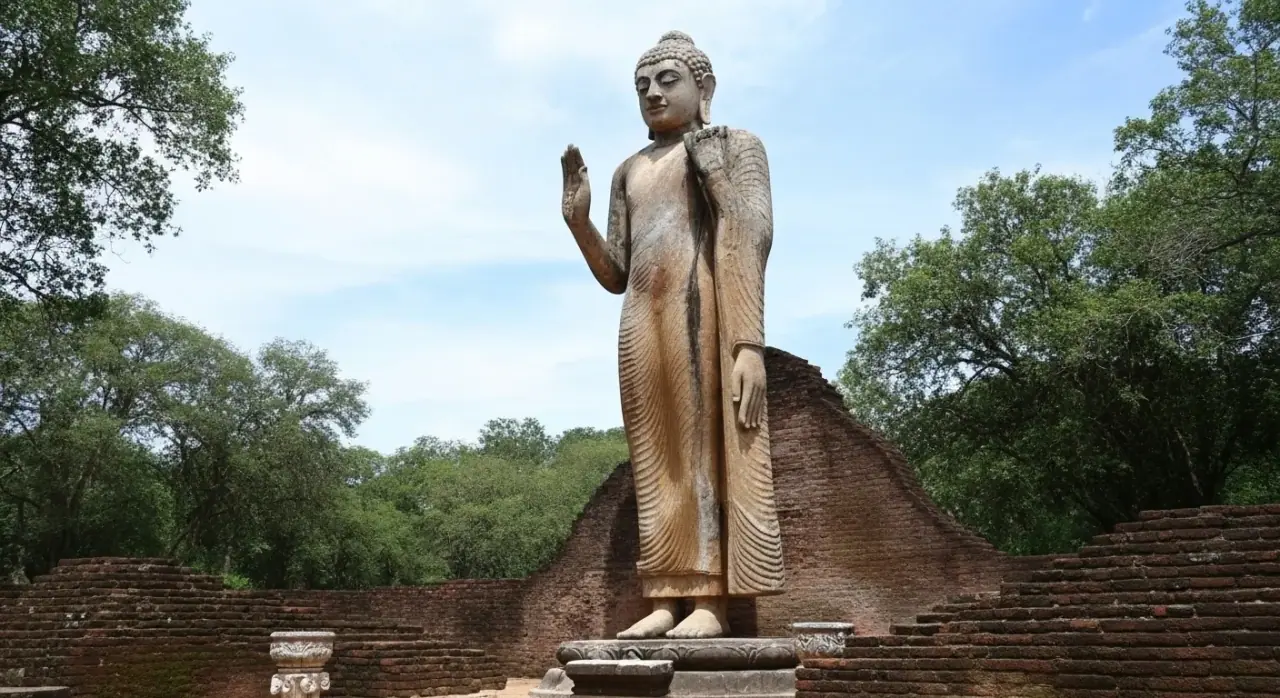
Altogether, the temple houses 153 Buddha statues, three statues of Sri Lankan kings, and four statues of Hindu deities (including Vishnu and Ganesha), symbolizing the long-standing religious syncretism that defines Sri Lankan culture.
Curated Spiritual Journeys with HBS Tours
We treat every visit to Dambulla as a pilgrimage into the heart of Sri Lankan heritage:
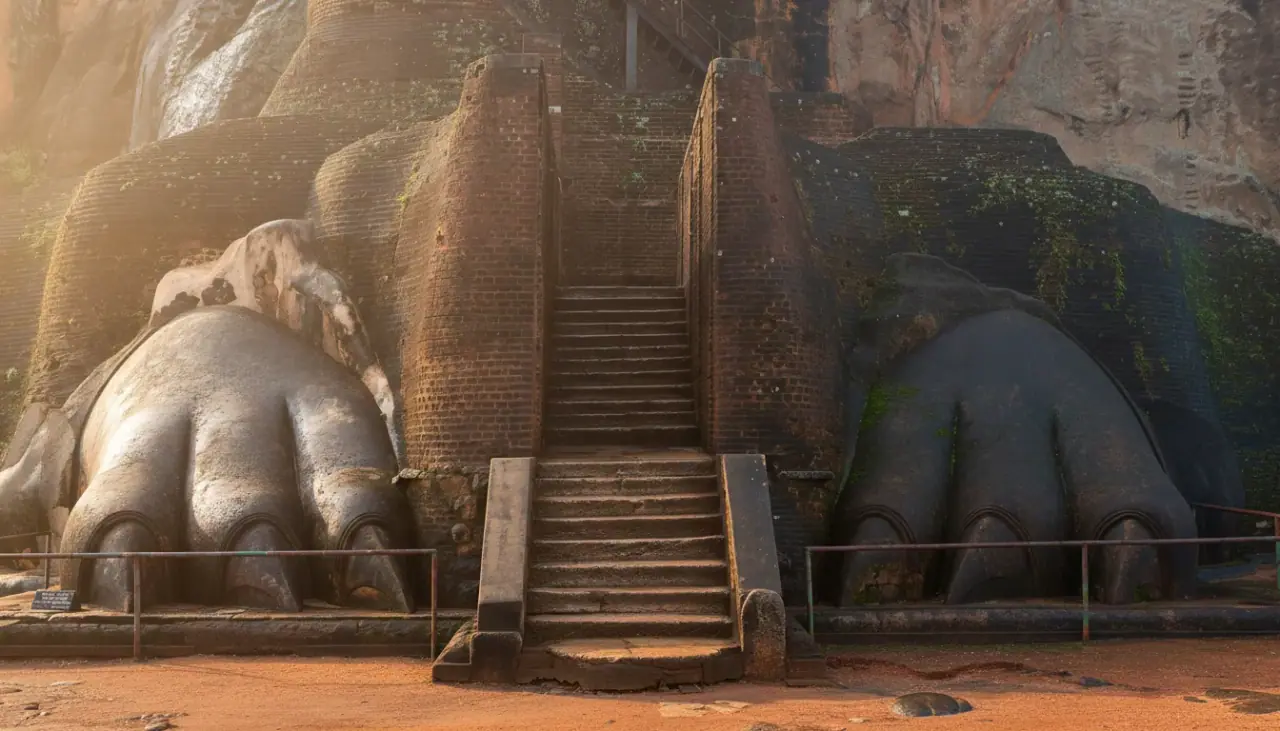
- Golden Hour Pilgrimage: We recommend visiting in the late afternoon. As the sun sets, the panoramic views of Sigiriya Rock from the temple courtyard are unparalleled, and the interior gold-leaf statues glow with a soft, ethereal light.
- Mural Interpretation: Our expert guides assist you in reading the complex 'Jataka' stories painted on the ceilings, explaining the symbolism behind the mudras (hand gestures) of the 153 statues.
- Monastic Courtyard Reflection: We provide a quiet space for contemplation within the temple grounds, allowing you to soak in the atmosphere of 2,000 years of continuous worship.
Traveler's Protocol: Honoring the Caves
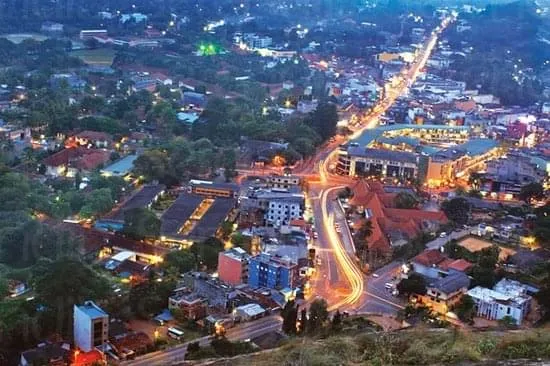
Dambulla is a critical hub in the Cultural Triangle, located about 20 km from Sigiriya. The ascent to the caves involves approximately 350 stone steps and takes about 10-15 minutes. Mandatory Etiquette: As an active place of worship, shoulders and knees must be covered, and shoes must be removed at the final entrance. HBS Tours provides luxury wraps for guests and ensures your footwear is kept safely at the gate. Photography is allowed inside the caves; however, using a flash is strictly prohibited to preserve the delicate pigments, and you should never pose with your back to a Buddha statue.